Friday, August 19, 2011

Impact of corruption on our society


By Shakil Ahmad | The writer is a retired secretary of the Government of Pakistan. He is a member of the former Civil Service of Pakistan.

To a varying degree, corruption exists in almost all countries. However, the degree to which it impacts the common people’s lives and increases poverty is directly proportional to the level of this scourge and how widespread it is in society. A country’s or province’s development depends on how much of the State’s resources are lost to this ugly practice. In developed countries, where corruption is limited to a small number of projects and where common people do not encounter it on a daily basis, the adverse impact tends to be marginal and does not jeopardise the welfare of its people. In contrast, a poor country like Pakistan, where each borrowed dollar must be spent to uplift the people from poverty, it has a significant impact.

A recent World Bank report lists corruption and lack of transparency as the two core reasons that hamper Pakistan’s drive for development. However, these indices do not convey the terrible pain and sufferings that the brutal practice of corruption has caused to the common people of Pakistan.

Many people in Pakistan believe that much of the development and a significant portion of the operations’ allocations are lost due to bribery and other related illegal and unethical activities. The extreme poverty and lack of infrastructure and basic services in the rural areas of Sindh and Balochistan are in part fuelled by bribery, influence peddling, extortion, and abuse of power. The people and international donors must rise to the occasion and start pressurising Islamabad to curtail corruption and improve governance.

Failure to do so in a timely manner will continue to frustrate the poor people and make them weary of the current democratic system and drive them to extremism.

It is a widely held view that the practice of bribery in Pakistan is widespread, systematic, and that it is entrenched at all levels of government. A World Bank report containing an assessment of the Pakistan’s Infrastructure Capacity (PICA) states that 15 percent of the country’s development budget for 2007-08 was lost in the procurement process alone due to corruption. This does not include subsequent costs of corruption in the implementation and maintenance stages of projects. Important business publications such as World Economic Forum’s Global Competitiveness Report (2007-08) says that corruption is the third greatest problem for companies doing business in Pakistan.

The report lists the first two problems as government bureaucracy and poor infrastructure. The Organisation for Economic Cooperation and Development (OECD) says that the World Bank and the Auditor General of Pakistan have complained about governance problems in recruitment, site selection, absenteeism and bribery. This has resulted in the cancellation or suspension of some of the World Bank’s projects such as the Balochistan Primary Education Project. Also, certain other loans were withheld after irregularities were uncovered.

Corruption is bound to flourish in a culture that encourages display of affluence without any regard as to how the wealth has been obtained. Lack of accountability plays a crucial role in the promotion of bribery and resistance to any form of reform.

To fully respond to the question as to which sectors are most affected by corruption, both quantitative and qualitative, it is worth bearing in mind that some of the reasons for which particular sectors are highlighted more often than others are due not only to objective merits, but also to the facts that:

p There is more research and survey work done in those areas, and;

p Public perception and awareness seem to be more vocal as regards those areas.

Thus, the exercise of highlighting some of the sectors should be read with the knowledge that corruption in Pakistan seems pervasive across most sectors. With that in mind, it is safe to say that expert sources indicate that the sectors among those most affected by it are the police and law enforcement, judiciary and legal profession, power sector, tax and customs, health and education, and land administration

In addition, public procurement seems to be a major concern across most sectors

These sectors seem to be affected by chains of:

p Petty corruption to access public services or to bypass the law (through the direct interaction of citizens with the respective authorities and bribe-paying).

p Middle and grand corruption (in public contracting and procurement as well as direct misappropriation of public funds by senior officials).

p Political patronage, conflicts of interest, influence peddling and other forms of corrupt behaviour are commonplace across the sectors.

The following are some examples of the damage that is caused by corruption: Defective, dangerous and inadequate infrastructure - poor and incomplete roads, badly constructed college buildings, fewer class rooms in schools that are liable to collapse with the first monsoon rains, railway tracks, hospital facilities, water projects, bridges or housing units. Abysmal education standards result when illiterate persons are recruited as school teachers for political reasons.

Many schools all over the country remain without teachers or fewer teachers to effectively educate students. More so, it is futile to talk about technical and engineering schools and the standards they have established. After three years of studies, neither the teacher nor his student knows the use of a drill machine.

Corrupt practices contribute to the inadequate number of beds in hospitals, no medicines for patients, as these are paid for but not procured or disposed of after their delivery at the hospital store. And, of course, there is no fuel in vehicles meant for transporting patients to hospitals. Most experts think that corruption is one of the most difficult problems in Pakistan’s society today. Its impact on the country’s towns and villages is extremely profound and poses a long-term threat to its culture, economics, and general well being of the people and the provinces where they reside.

The future of Pakistan and alleviation of poverty in rural areas of Pakistan is highly dependent on successful completion of all development projects. This success is threatened by the evil of greasing the palm that must be stopped urgently before it is too late. The religious extremism, deteriorating economic conditions, and worsening living conditions are unnerving the people of rural Sindh and Baluchistan, who until now have refused to fall in the trap of extremism.

It is imperative that all stakeholders, including political parties, government officials, civil society organisations, private companies, donor agencies and common people, recognise the carnage that current levels of corruption can do to the heartlands of Pakistan. They must form a grand coalition to stop the menace before it is too late.

Monday, August 8, 2011

Video: Deaths of SEAL Team 6 Exposed


Posted on Pakalert on August 7, 2011

[


Aaron Dykes & Alex Jones
Infowars.com

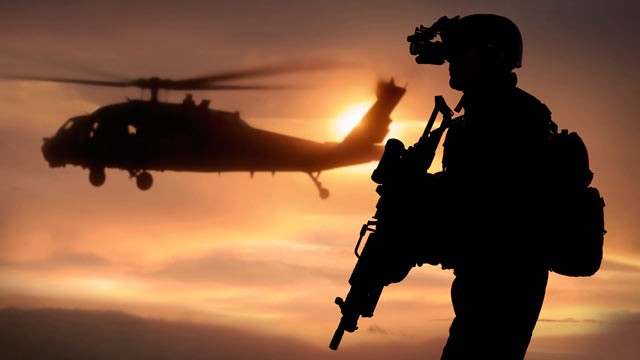
Associated Press sources are reporting a statistically impossible tragedy for U.S. forces in Afghanistan– that of the 38 NATO forces killed in a helicopter crash Friday night, “more than 20″ were members of SEAL Team 6, the covert unit that took credit for killing Osama bin Laden in May.

Mainstream sources are seizing upon claims that the Taliban took credit for downing the helicopter, but that means nothing. Media instantly ran reports that al Qaeda was responsible for the bombing & shootings in Norway; moreover, anyone on a message board can make such claims.

Instead, Alex Jones predicted shortly after the raid on bin Laden’s compound that SEALs would soon be reported dead in a helicopter crash or staged incident following multiple reports from military sources who’ve proved accurate in the past, including on-air callers, that SEALs did indeed die during the raid. Official stories admitted after-the-fact that a helicopter went down during the mission, but claimed there were no deaths of U.S. forces.

Below is Alex’s report on the breaking news of SEAL Team 6′s official demise:

Infowars is on the record reporting that members of Seal Team 6 died in the so called OBL raid. The government admits that a super secret helicopter did crash during the OBL raid but says no one died, our intel is different. We predicted that the spin doctors would stage a crash or when a real crash took place that they would say the SEALs died then. This is a old trick that governments all over the world have been caught pulling in the past. Some speculate that Obama had the team killed to cover up what really happened; however our intel does not point that way. The Pentagonmay have blown the helicopter up on the ground on the night of the raid and we cover that in the above video. Lastly the globalist MSM is reporting that terroristhave taken credit but that is notoriously filled with disinfo, like in the Norway attack when a fake terrorist group took credit and the media ran with it.

According to the sources, military personnel internally admit to the SEAL deaths, however it was not clear whether it had been the result of an accidental crash, from a firefight with Pakistani military forces stationed only a short distance from the compound, or whether, as Pakistani eyewitnesses indicated (below), the helicopter exploded after covert forces entered.

Whatever the true story, one thing is clear: dead men tell no tales. The inconvenient truth is that governments throughout history have disposed of heroes, covert troops and special forces to keep the real story from coming out. Helicopter and plane crashes have been one of the favorite methods for tying up these loose ends.

Abbottabad residents told CCTV reporters they don’t believe Osama bin Laden was ever at this compund and that the operation was a ‘hoax’. Pakistan’s anti-terrorist squad also could not confirm the killing, according to reports.

Pakistani eyewitnesses to the Abbottabad raid on Osama’s reputed compound reported that a U.S. helicopter exploded and that Americans died, despite the fact that mainstream media reports claimed no one died in the raid. The crash was reported but remains little explained.

As Dr. Paul Craig Roberts presciently dredged up again only yesterday:

In the immediate aftermath of bin Laden’s alleged murder by the SEALs, Pakistani TV interviewed the next door neighbor to bin Laden’s alleged compound. Someone supplied the video with an Englishtranslation running at the bottom of the video. According to the translation, the next door neighbor, Mr. Bashir, said that he watched the entire operation from the roof of his house. There were 3 helicopters. Only 1 landed. About a dozen men got out and entered the house. They shortly returned and boarded the helicopter. When the helicopter lifted off it exploded, killing all aboard. Mr. Bashir reports seeing bodies and pieces of bodies all over.

The US government acknowledges that it lost a helicopter, but claims no one was hurt. Obviously, as there were no further landings, if everyone was killed as Mr. Bashir reports, there was no body to be dumped into the ocean.

SEAL Team 6 was formally dissolved in 1987, becoming the Naval Special Warfare Development Group, with its command structure transferred to Joint Special Operations Command. The unit’s true nature and even numbers are unknown.

This May 17 Navy Times article would revise the official account of events, admitting to the crash incident:

Aboard two Black Hawk helicopters were 23 SEALs, an interpreter and a tracking dog named Cairo. Nineteen SEALs would enter the compound, and three of them would find bin Laden, one official said, providing the exact numbers for the first time.

Aboard the Chinooks were two dozen more SEALs, as backup.

[...] The plan unraveled as the first helicopter tried to hover over the compound. The Black Hawk skittered around uncontrollably in the heat-thinned air, forcing the pilot to land. As he did, the tail and rotor got caught on one of the compound’s 12-foot walls. The pilot quickly buried the aircraft’s nose in the dirt to keep it from tipping over, and the SEALs clambered out into an outer courtyard.

[...] It took approximately 15 minutes to reach bin Laden, one official said. The next 23 or so were spent blowing up the broken chopper, after rounding up nine women and 18 children to get them out of range of the blast.

Wednesday, August 3, 2011

Gift of blood ends a Pakistani town’s bloody history

By Rick Westhead
South Asia Bureau

BASTI MAHRAN, PAKISTAN—A single act of kindness, profound because it was so rare and unexpected, transformed this sun-bleached village in a remote corner of the Punjab.


A Hindu man gave his blood to save the life of a Muslim woman who had lost too much in childbirth.
In the seven years since, the 1,600 Muslims and 1,400 Hindus in this town live in peaceful co-existence, extraordinary because sectarian violence has marked the histories of Pakistan and India since the bloody partition of 1947.


“I was afraid, for sure. But it was the right thing to do,” says Bachu Ram, the blood donor. He is smoking a cigarette in the home of a Muslim village elder, who once was so steeped in hatred that he led the charge on the clinic to take Ram’s life.
Hatred and violence once defined life in Basti Mahran. Muslim men routinely raped Hindu girls — “we would have 20 cases a year,” says one local. Muslim men beat Hindus with sticks and fists, seemingly with tacit approval of the local police. Cattle belonging to Hindu families were slaughtered if they strayed too close to Muslim homes.


Mahar Abdul Latif, the host who now pours Ram tea, spent three years during the late 1990s as a member of the extremist religious group Jaish-e-Mohammad. He patrolled the rugged mountain passes and valleys of Kashmir, a region claimed both by India and Pakistan, killing Hindus when they crossed his path.
“I have done much I am ashamed of,” says Latif, a 37-year-old father of three. “But we are friends now. Our kids are friends, too. They study and play together.”


Latif and other local Muslims gave their time and money last year to refurbish a temple dedicated to the Hindu god Hanuman. Muslims visit the temple when their neighbours celebrate Diwali, the Hindu festival of lights. Hindus respond in kind, joining in Muslim holiday celebrations.
This village’s transformation seems to have happened in a moment.


The medical clinic was only open for a three-day health-care blitz when the young mother arrived suffering from severe blood loss and needing an infusion of O-negative blood. The doctors couldn’t find a donor.
Ram made his offer. As word spread among the village’s Muslims, Latif led the charge on the clinic. It had always incensed him that the doctors rejected his demand for two separate camps, partitioned facilities so that instruments used on Hindus could not be used on Muslims.


Outside the clinic, a doctor intercepted Latif and told him the only chance the woman had was Ram.
“I don’t know what came over me,” Latif says. “I remember thinking that here we were refusing to even shake hands with the Hindus and he was willing to give us his blood. It was a marvelous thing he did. It was the turning point of my life.”
The next day, Latif went to say thank you. It’s said to be the first time a Muslim had ever gone to a Hindu’s home.
Word of Ram’s charity and Latif’s remorse spread through Basti Mahran.


Muslim and Hindu women began talking to each other. Rapes virtually disappeared. Eventually, a single tin-roofed cowshed was built to house all of the village’s 3,000 cows, sheltering them from the scorching desert sun.
“That was a big deal,” Ram says. “Before, you would not see the cows near each other at all. A Muslim would not have touched the milk from a cow owned by Hindus.”


Standing in Basti Mahran’s round, thatch-roofed Hindu temple, 65-year-old Sobha Ram says he can’t believe the changes in the village.
“For years, we lived in fear of the Muslims but not now,” he says, cleaning photos of Hindu gurus and adjusting strings of paper flowers and glitter paper.
The odds seemed against peace in this village.


In 1947, the year of partition, Hindus made up 15 per cent of Pakistan’s population. But soon many migrated to India, seeking a better, safer life. The same happened with Muslims who lived in India and moved west.
Political leaders seemed ready to highlight the differences between the cultures, rather than their many similarities.
“The Hindus and Muslims belong to two different religious philosophies, social customs and literature,” said Muhammad Ali Jinnah, Pakistan’s founding father. “They neither intermarry, nor interdine together, and indeed they belong to two different civilizations.”


Today, just 2 per cent of Pakistan’s 170 million residents are Hindu.
Yet the Hindus in Basti Mahran didn’t seek refuge elsewhere.
“We were born here and we don’t know anyone in India. Even though we are Hindu, we are still Pakistani,” says Sobha Ram. “The few people who did want to go couldn’t afford it.”


The changes have had a direct impact on the quality of life, and have helped earn better incomes.
Hindu and Muslim women are working together to sell cotton to wholesaling middlemen, earning 200 rupees ($2.50) for a 40-kilogram bag of cotton, four times what they earned when they sold their cotton separately.
“You even see women travelling together unaccompanied by men to places like Lahore and Islamabad,” says Razia Malik, an aid worker who has spent time in Basti Mahran.


Communal harmony aside, it’s still a difficult life here.
Each morning, women set out in stifling 40-degree heat on a four kilometre-walk to collect the day’s drinking water. Cows have to be shepherded eight kilometres daily to their water supply.


Most don’t have enough money for feed for their cows, which graze on the Spartan green bushes that dot the desert plains.
Now that they aren’t fighting each other, Basti Mahran’s Muslim and Hindus are working to demand a new road through the village and they have asked the state government to extend water pipes here. Last year, they successfully lobbied for power lines that provide electricity for at least 12 hours a day.


“We’ve been so wrong about the Hindus,” Latif says, watching his 7-year-old son Osama play alongside Ram’s 11-year-old boy Sindhal Ram. “The biggest surprise has been that they are just like us. They want to live their lives the same way we do.”

The world of scent


Culture By Amtul Jamil


As a kid, I accompanied my mother to Lucknow Perfumery located near the entrance to Anarkali Bazaar. I enjoyed the feel of the shop and the ritual of smelling ittars offered for selection. My mother's favorite was Khus, and she wore it all summer long.

Article Box


Article Box

The word 'ittar' or 'attar' is an Arabic word that means 'scent'. Ittar is a natural scent derived from herbs, flowers and wood; it is widely used in Pakistan, India, the Middle East and the Far East. It is highly concentrated; only a drop is used, and a small bottle lasts for months. Ittar is worn directly on the body; it is long-lasting and body heat intensifies its smell.
One legend traces the origin of rose ittar to Empress Nur Jehan. The princess's bath water was sprinkled daily with rose petals. Once, on a day when the princess did not bathe, her bath remained filled overnight. The next day, when preparing the princess's bath, the servants added fresh rose petals after removing the old ones, but did not change the bath water. Nur Jehan exclaimed that her bath exuded a fragrance such as never before. Upon learning that rose petals had remained soaked overnight in the bath, causing them to emit oil because of the hot weather, she commanded that a vapor of rose perfume be prepared for her. And so gulab ittar was born!

Sufi worshipers use ittar during meditation circles and dances

The Mughal nobles loved ittar and it was a practice of nobility to offer ittar, in tiny crystal cut bottles known as itardans, to their guests when bidding them farewell. Oud, a rare aroma from the agarwood, was popular with the Mughal princes. Chameli was the favorite perfume of the Nizams of Hyderabad. The great poet Mirza Ghalib too was an ittar lover; when meeting his beloved in the winter months, he would rub Hina on his hands and face.
At one time, when the Emperor Humayun was engaged in a battle in Umer Kot, a son named Akbar was born to him. Now Humayun had no gifts to share with his companions to celebrate the birth. It is said that he opened his bottle of Muskh and gave a little to each companion saying:
"Pray that my son Akbar's fame spreads far and wide just like the fragrance of Mushk spreads far and wide."
A Persian verse expresses the power of this aroma:
"Scent Speaks
The Perfumier does Not Need to tell
'It Is Mushk'."

Article Box


Article Box

Pink desi rose has the purest essence

Traditionally, a father on his daughter's marriage presented her with a box containing six tiny bottles of ittar (girls before marriage were not allowed to use ittar as it could attract male attention). The box usually contained Gulab, Chameli, Motia, Hina, Sandal and Amber. In families with high social status, hand-painted crystal bottles stored the scents, and the boxes containing them were ornate and decked up. Ittar played a role in family life; its use complemented the comfort in the home.
Scent is curative and aromatherapy is popular in alternative remedies. The khushboo of ittar was handy for alleviation of maladies in Indian households. A cure for restlessness and anxiety was Lakhluba, wherein a fresh earthen glass was filled with water and a cucumber piece and a Khus stick were added to it; smelling it calmed restlessness. Sandal oil was rubbed on the forehead to cure headaches. The shamama smell is used for cold and flu. Khus prevents the effects of lu; if you apply Khus before riding a bicycle in the summer, you are protected from the effects of the hot weather. And when fatigued you must smell Motia. Rose petals have a medicinal value; as a matter of fact, all eye drops contain rose water essence.

Article Box


Article Box

Of course scents too are subject to whims of taste and temperament. A friend narrated that her father wore Shamama, her mother Gulab and her aunt Khus. The ittar-wala would arrive in her home carrying a leather case containing an array of ittars. He put a dab on a small stick with cotton at the end; this was sent to the women's quarters, and her mother, after smelling the offerings, chose the one she liked the best.
The girls in the Mughal harems were taught the art of enticement through dress, dance, poetry and knowledge of "how to attract the king through scent". In the khawab gah (dream room), a relaxation place for the king before retiring for the night, music, dance, poetry and fragrance filled the evening.

Article Box


Article Box

The Mughal nobles loved ittar and offered ittar, in tiny crystal cut bottles known as itardans, to their guests when bidding them farewell

An elderly neighbor of mine told me that her uncle was a smell lover; he kept a room full of ittar. When his sawari drove down a street, people knew by the aroma in the street that he had passed that way. Every year, when his itardans were cleaned, the cotton balls used for cleaning were saved; in the winter a couple of cotton balls were placed on the coals whenever the heating stove was lit; the whole house filled with fragrance. Upon his death, his ittars were bequeathed to his family members - a fragrant part of their inheritance!
A special ittar, a mixture of Hina and Amber, was created before Partition, though in those days ittars were not usually mixed; the caption read 'Special Quality'; a thread was tied to the neck of the bottle and the bottle placed in a special box. This ittar was bestowed as a gift to the beloved. But its unique combination recipes, inscribed in Persian, are now lost forever. Though ittar was a Muslim tradition both Hindus and Muslims used it as a symbol of love.

Wearers claim Gil smell gives taskeen to the rooh (peace to the soul); some put it on curtains at home during the rainy season to enjoy tranquility

Just as flowers are seasonal so too are fragrances; ittars are worn according to the seasons. Khus in the summer, Gil (the aroma of earth after the first raindrops) in the monsoon; wearers claim Gil smell gives taskeen to the rooh (peace to the soul); some put it on curtains at home during the rainy season to enjoy tranquility. Hina is a winter smell, Gulab is used all year round.
Ittar has its rituals; if one wore Khus in winter or Hina in summer, the wearer was deemed to be an ignorant boor not versed in the culture of ittar. Eid was a special occasion and all children received a dab. If Eid came in winter, Hina was worn; and Khus if Eid came in summer. Suhag was a special blend for brides and it was said the fragrance permeated the mind and heart of the couple forever. Shamama was usually worn for Friday prayers.
Ladies took a drop, rubbed their palms together to wake up the smell, applied it to wrists and neck and rubbed it on their dupatta so the khushboo could soak in there. The ladies added khushboo to their last mug full of bath water to keep smelling nice. Some would dilute a drop of Khus, Gulab or Hina, in rosewater to soften the smell. At a Mehndi function, a drop of Hina was added to the mehndi and the bride's hennaed hands smelled sweet.
Perfumery is a prosperous industry. The nose of a perfumer is very precious. Indeed, the French insure the noses of their perfumers. It is tradition that when you visit an accomplished perfumer, you are given gifts of perfume samples or invited to smell her very special fragrances. When I visited a perfumer recently, I was offered a whiff of mushk, a divine and unforgettable smell!
Some prices quoted by a wholesaler: Gulab - Rs. 10,000/12,000 per tola. Khus, Rs. 2,000 per tola. Mushk (an extract from the navel of the black deer) is the most expensive and costs more than Rs. 50,000 per tola; it is almost impossible to get.
Pink desi rose has the purest essence. Pink roses have become rare in Pakistan as growers turned to planting red roses; there was more money in red roses as they are used in bridal functions and in the garlands worn by the bridegrooms.
In Shahdara, Lahore, there is still an old garden of pink roses where perfumers go to purchase their flowers.
Even before Partition, perfumers would come to Lahore from all over India to buy roses. The older a rose bush the more the smell. The more the petals the greater the essence; The desi rose has 36 petals, the wild rose 24. In Shahdara, there are four hundred to five hundred pure varieties of roses.
Ittars are made very early in the morning at fajar. Flower petals are put in the still soon after the flowers are cut for that is when their smell is most intense. As the day progresses, flowers lose their smell to heat.
In Pakistan and India, some essence extraction is still done in the old way. Round copper stills called degs are taken to a flower plantation; one maund of petals and one maund of water are put in a deg overnight; a wood fire is lit under the deg; the boiling water steam is routed via a pipe to a big cauldron, kept in a nearby lake for cooling. The steam turns into water in the cool cauldron and water and oil become separated in the condensed steam vapor; the oil floating on top is called absolute. Absolute is pure essence (also called 'rooh'). Absolute flies from clothes in 15 minutes. Sandal oil is added to stabilize the essence so scent can last for 24 hours. These days, Pandari is used to stabilize as sandal oil has become very rare.
The city of Kanauj in Uttar Pradesh is the home of ittar making. In Kanauj even the water gulleys in the streets have khushboo. Every house is into perfume making; one house makes Chameli, another makes Gulab and so on.
A strong connection is often established to a particular fragrance and one person will apply only Gulab, another only Hina; a person may become hooked to a smell and feel a lack when he does not smell it. The 'shaukeen' have a selection of fragrances: they reserve one smell for Thursday, another for Friday and so on.
Aging a smell releases the essence, the 'rooh'. In the old days, people bought 1 tola of ittar, such as Oud, put it in an itardan and then used it after 10 years; the ittar bottles were made of leather or glass. When essence is left in a bottle, the smell will grow stronger; in colognes or perfumes with an alcohol content, the smell vanishes when the alcohol evaporates.
Ittar has an effect on the body; warm ittars such as Musk, Amber and Oud increase body temperature and are used in winter. Cool ittars such as Rose, Jasmine, Khus and Kewda are cooling for the body and are used in the summer.
In our times, there is an explosion of smells; there are around 400 smells; new fragrances are created by blending two or more blends. Smells come from nature and cannot be manufactured by mixing chemicals; even when chemicals are mixed a drop of smell has to come from nature to create fragrance.
In ancient times scent was linked to the sacred. The use of aromatic materials was limited to religious and medical use and was the domain of the clergy and apothecaries. However, the use of fragrance passed to the public when with the advent of Islam all Muslims were enjoined to use perfume (if they could). Fragrance was recommended for the Friday congregational prayer, for preparation for the pilgrimage, and purification during the washing ritual of the dead.
According to the mystics, all senses except smell give pleasure to the body; the sense of smell gives pleasure to the soul. Sufi worshipers use ittar during meditation circles and dances.
We "see" the world largely through our eyes and ears and our sense of smell is under-used. Yet mothers can recognize their babies by smell, and newborns recognize their mothers in the same way. A smell attracts and makes us want to know another or repels us and makes us avoid another; it is part of the biology of attraction.
Smells retain an uncanny power to move us; a whiff of a long-forgotten scent takes one back to a bygone moment: the memories evoked have a haunting quality. Indeed, the smells that surround us affect our well-being throughout our lives.


Amtul Jamil is a freelance contributor

Wednesday, July 13, 2011

Time to exit, but wait!


Eric S. Margolis (veteran US journalist)
27 June 2011, 7:22 PM

“Far-called our navies melt away

On dune and headland sinks the fire

Lo, all our pomp of yesterday

Is one with Nineveh and Tyre! “

-           Rudyard Kipling Recessional

War is waged to achieve political objectives, not to kill enemies.   In this sense, the United States has lost the 10-year Afghan conflict, its longest war.  Afghanistan remains the “graveyard of empires.”

The US has failed to install an obedient regime in Kabul that controls Afghanistan. It has made foes of the Pashtun majority, and, in pursuing this war, gravely undermined Pakistan. Claims that US forces were in Afghanistan to hunt the late Osama bin Laden were widely disbelieved.

Last Wednesday, President Barack Obama bowed to public opinion, approaching elections, military reality and financial woes by announcing he would withdraw a third of the 100,000 US troops from Afghanistan by the end of next summer. Pentagon brass growled open opposition.

US allies France and Germany announced similar troops reductions. All foreign troops are supposed to quit Afghanistan by the end of 2014.

Washington currently spends at least $10 billion monthly on the Afghan war, not counting “black” payments, CIA and NSA operations. The US has poured $18.8 billion in development aid into Afghanistan since 2001 with nothing to show for the effort. Pakistan has been given $20 billion to support the Afghan War.  The US deficit is heading over $1.4 trillion. The national debt, when unfunded pensions and benefits are added, is likely $100 trillion, according to the chief of PIMCO, the world’s largest bond trader.

Forty-four million Americans now receive food stamps; the national infrastructure of roads, airports, bridges and schools is crumbling from neglect. Unemployment, officially at 9.5 per cent, is probably closer to 20 per cent.

The cry is being heard: “Rebuild America, not Afghanistan.”

In spite of intense pro-war propaganda, over half of Americans now oppose the Afghan War. Even US-installed Afghan president Hamid Karzai calls it, “ineffective, apart from causing civilian casualties.”

So will the US really pull out of Afghanistan? That remains to be seen. There are contradictory signs.

Mid-level talks between the US and Taleban are under way. The US will probably keep some of its remaining 66,000 soldiers in Afghanistan after 2014, rebranding them training troops. The huge US bases at Kandahar and Bagram will be retained. 

Billions more will be spent on the Afghan government army and police. They have so far proved ineffective because most are composed of Tajik and Uzbek mercenaries who are hated and distrusted by the Pashtun.

A similar process is underway in Iraq where “withdrawal” means keeping renamed US combat brigades in Iraq, thousands of mercenaries, and US combat forces in neighbouring Kuwait and the Gulf. New US embassies in Baghdad and Kabul – huge, fortified complexes with their own mercenary combat forces – will be the world’s biggest. Kabul will have a staff of 1,000 US personnel. Bin Laden called them “crusader fortresses.”

In addition, the US will still arm and finance allied Tajik and Uzbek militias in Afghanistan. Financing Pakistan’s US-backed regime and Uzbekistan must also continue at around $3 billion yearly.  The US appears to be going and staying at the same time. By contrast, Taleban’s position is clear and simple: it will continue fighting until all foreign troops are withdrawn. US Special Forces, drones and hit squads have been unable to assassinate enough Taleban commanders to make the mujahidin stop fighting.

Americans never study history, not even their own. They don’t recall founding father, the great Benjamin Franklin, who said, “there is no good war, and no bad peace.” Or that the Pashtun Taleban and its allies are fierce, dedicated, undefeated warriors. I’ve been in combat with them and remain in awe of their courage and love of combat. The Pashtun mujahidin will keep fighting as always, as long as their ammunition lasts.   

America, for all its B-1 heavy bombers, strike fighters, missiles, helicopter gunships and drones, armour, super electronics, spies in the sky and all the other high tech weapons of modern war has failed to defeat some 30,000 tribal fighters with nothing more than small arms and legendary valour.  

The US has lost the all important military initiative in Afghanistan.  It may linger there, but it cannot win.

Eric Margolis is a veteran US journalist

Thursday, June 2, 2011

Where do we go from here?!

Mehran....yet another version ?!
Friends,
A friend, senior retired professional general well respected, sent me this alarming piece. I am forwarding for your analysis and comments.
.

I met an officer of my unit at a wedding on Sunday 29 may ’11. As my unit is in Malir, I asked him if he had any knowledge of the Mehran attack. He said, his company was the one called in for the operation as it was on rapid deployment force duty. He gave me a blow by blow account of what happened. I shall only give the gist of what he said.
The runway of Shahrah e faisal is shared by the Navy as well as the PAF. The runway is the dividing line.
At the perimeter of the naval base is a nullah about 15-20 meters wide. This is full of shrubs and trees and bushes. The terrorists had parked their vehicles about two KMs down and walked along the far side of the nullah. At exactly 90 degrees from the Orions they built a proper infantry fashion Assault Bridge. They crossed the nullah over the assault bridge, and made a bee line to the Orions. Four of the attackers went round from the PAF side and took up positions facing the Orions, across the runway.
They fired all the seventy rocket launchers they had brought onto and into the two parked Orions. The destruction was total. The officer said except for two pieces of tyres of an aircraft which he saw, everything else was total ashes.
The attackers had come in totally undetected. When they fired the rockets simultaneously, the local naval security forces rushed to the point. They ran in along the runway. The firing went on for about 12-15 mns. Immediately after the fire the attackers on the Naval side withdrew across the assault bridge and disappeared. No one knows how many they were. Figures quoted are only conjectures.
When the local security forces rushed along the runway, they inadvertently cut off the route of withdrawal of the four attackers. And a cross fire started between the two sides.
In the meantime, this officers company had reached the mehran base by about 11 pm. However, they had orders ‘from above’, to not to enter the base. They could hear the firing but were not allowed to move in.
At 1:30 in the morning they were allowed to move in but were prohibited to open fire. At this stage I asked him if they had been sent in to sell pakoras! He was quite cut up and said the troops were very upset about it too. But their orders were very strict – no fire.


By this time all fire had stopped before they were allowed to move in.
They knew that four attackers were still there in the PAF area. An area search was carried out but no one was found because of the night. After first light along with the Zarrar company of SSG the grounds were scoured. An officer with a jawan were searching for a lost magazine, as they neared a large bush, they were fired upon. The sepoy was injured. The officer fired back and killed the attacker. Thereafter three more were killed in an exchange of fire. No more bodies were found
While this company was being held outside the Base, the officer said he saw Rahman malik on the TV giving a running commentary on the action as if he was standing in the witness stand!! He also stated that before they were allowed in, RM was announcing very happily “all the terrorists have escaped. No one has been killed or captured”. The troops and officers were all aghast at his attitude and his glee!!
All the weapons and equipment found on the site and attackers was of Russian origin.
The attackers were in the middle of two bases and all the aircraft of the PN and PAF were within their beat. They could have destroyed or incapacitated most of the PAF aircraft and helicopters including Lamas. But nothing else was touched.. They had concentrated their total fire power onto the total destruction of the two Orions only.
The Americans on the base were flown out the same night.
I have tried to reproduce what the officer said, verbatim.
My observations.
These Orions had been used for surveillance in Baluchistan where the Americans are actively involved in terrorist activities. All their activities were monitored and the wireless messages were recorded. This is the capacity of the Orion. And therefore that could have been a great embarrassment for the Americans if it leaked out. Hence the Orions had to be destroyed so much that the recorders and black boxes were destroyed too along with the nefarious evidence.
The attackers came direct onto the two parked Orions because they were guided through Satellite GPS. The Americans at the base were acting as FACs to direct them. They had finished their jobs and were no longer required. Their safety demanded they be not available for any interrogation etc.
RM was in charge of the operations, and thus the peculiar orders to the army unit, ostensibly for the safety of his American friends
Another revealing news I got was that the Americans are paying USD 500millions each annually to Asif, Rahman and Nawaz Sharif to keep their mouths shut and look after US interests. One of the bankers being quoted said he had been involved personally in the transaction of $500 M in the case of Nawaz!
The photo of one attacker killed shows a full tattoo on his left arm fro stout shoulder to hand. This excludes the person being a Taliban, a Muslim, Pakistani or even Indian. Its not part of our culture. Russian or Europeans would have a single tattoo. The full arm or body tattoos are only American culture. Draw your own conclusions.
I thought you should know.
( Name removed )